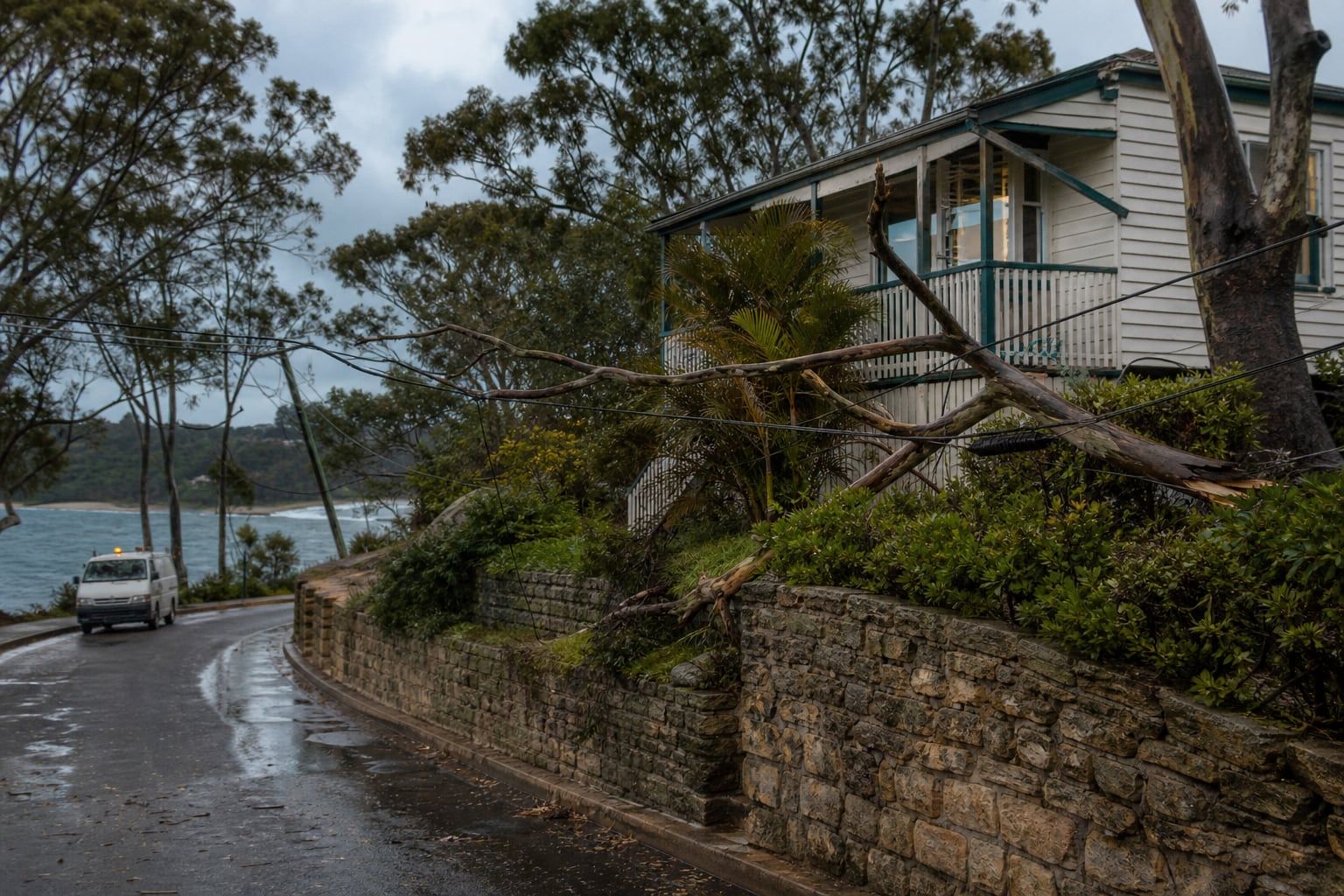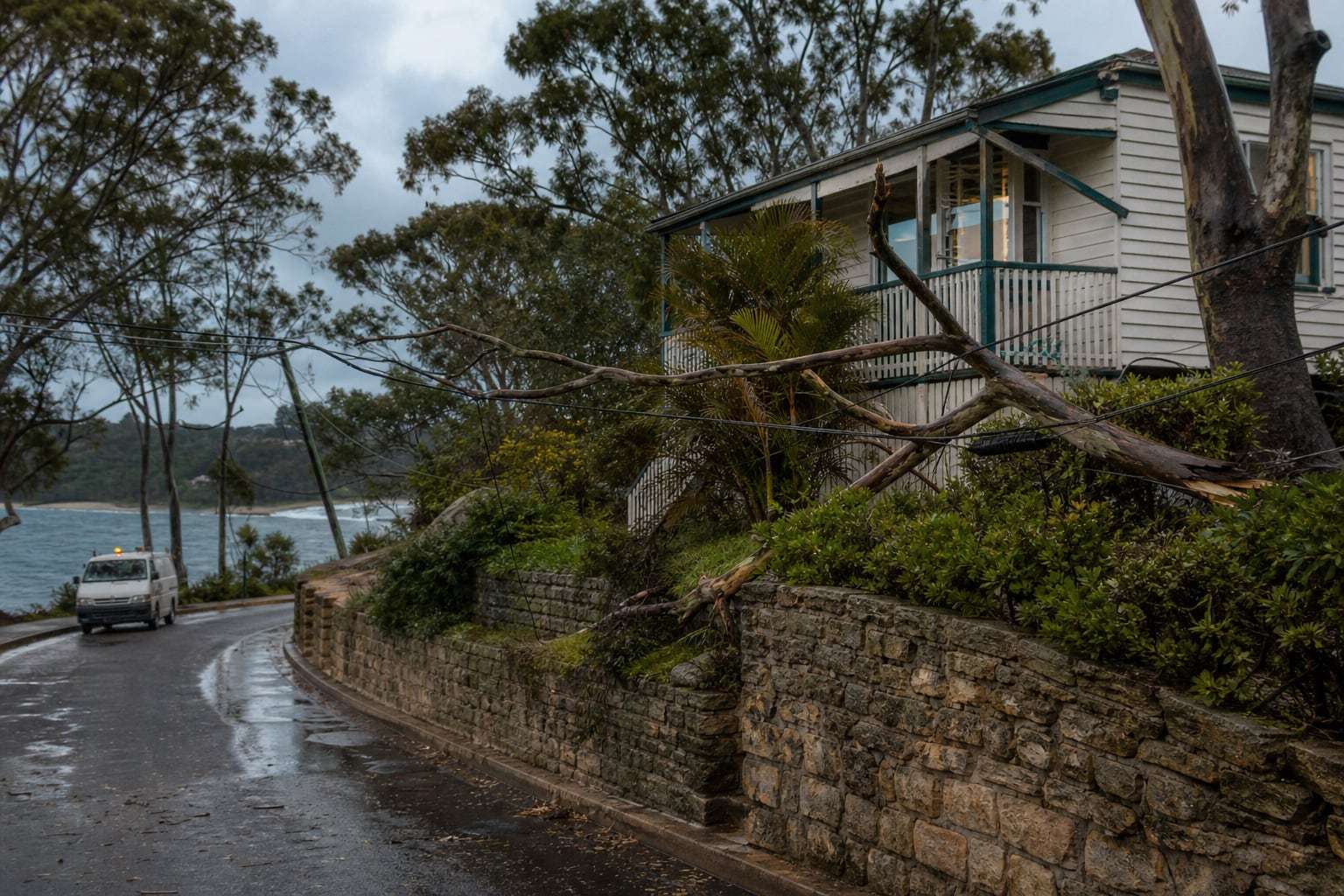
Power line down after a storm: what Sutherland Shire homeowners should do
What to do, who to call and what happens next when a storm brings down the power line to your house in the Shire.
Storms are part of life in the Sutherland Shire. Southerly busters roar in off the ocean at Cronulla and Kurnell, and summer storms drop gum branches across the bushy streets of Engadine, Jannali, Como and Gymea. When one of those storms brings down the power line to your house, what you do in the first few minutes matters most. This guide walks through it.
Step 1: Keep everyone clear
Stay at least eight metres away from any fallen or low-hanging line, and keep children and pets back. Assume it’s live, even if it isn’t sparking and even if your power is off. Don’t try to move it, don’t touch branches resting on it, and don’t touch fences, gutters or cars it’s in contact with. Wet ground makes everything more dangerous.
If someone has had an electric shock, call 000 first.
Step 2: Work out which line it is
- A street line or street pole: this is Ausgrid’s network. Call Ausgrid on 13 13 88.
- The line from the street pole to your house: this is the service line. If it’s down, call Ausgrid first, because the network end may need isolating.
- Your raiser or bracket has torn off the house: call us; this is your point of attachment.
- A private pole on your land, or the line from it to the house: this is your private equipment. Call us.
If you can’t tell, call Ausgrid first and tell them what you see.
Step 3: Make your side safe
If it’s safe to reach your switchboard without going near the fallen line, you can turn off the main switch. Don’t go near the meter box if it’s wet, smoking or damaged. Don’t run a generator through the house wiring.
Step 4: Call a Level 2 electrician
Work on the line to your house, the raiser and the mains needs an accredited Level 2. Our emergency level 2 electrician service covers the Shire 24/7. When you call, tell us:
- The address and how to get in
- What’s down and where
- Whether the house has power and whether the neighbours do
- Whether anyone has touched anything or had a shock
A photo taken from a safe distance helps us bring the right parts.
What happens when we arrive
We make the site safe first, isolating the supply and securing the damaged line. Then we assess the damage:
- Service line: repaired or replaced, then reconnected
- Raiser or bracket: often bent or torn out, especially where salt corrosion has weakened it. A point of attachment upgrade replaces it with new galvanised hardware
- Mains: checked for damage where the raiser pulled away
- Private pole: if it has snapped or is leaning, it’s replaced or the supply is re-routed. See private power pole replacement
- Service fuse: replaced if it blew
Where we can, we restore power the same visit. If parts are needed, we make everything safe and come back.
Step 5: Insurance
Storm damage to your service line, raiser, mains or private pole is often covered by home insurance. Before repairs, take photos from a safe distance. We give you a written report with photos of the damage and the repair for your claim. Keep your certificate of compliance too.
Why lines come down in the Shire
- Trees. Gums drop limbs in wind and heat, and streets in Engadine, Jannali, Como, Gymea and Oyster Bay have big trees close to lines.
- Salt. Coastal raisers and brackets corrode from the base and can fail under storm loads.
- Old private poles. Rotten timber poles on bush blocks can snap in high wind.
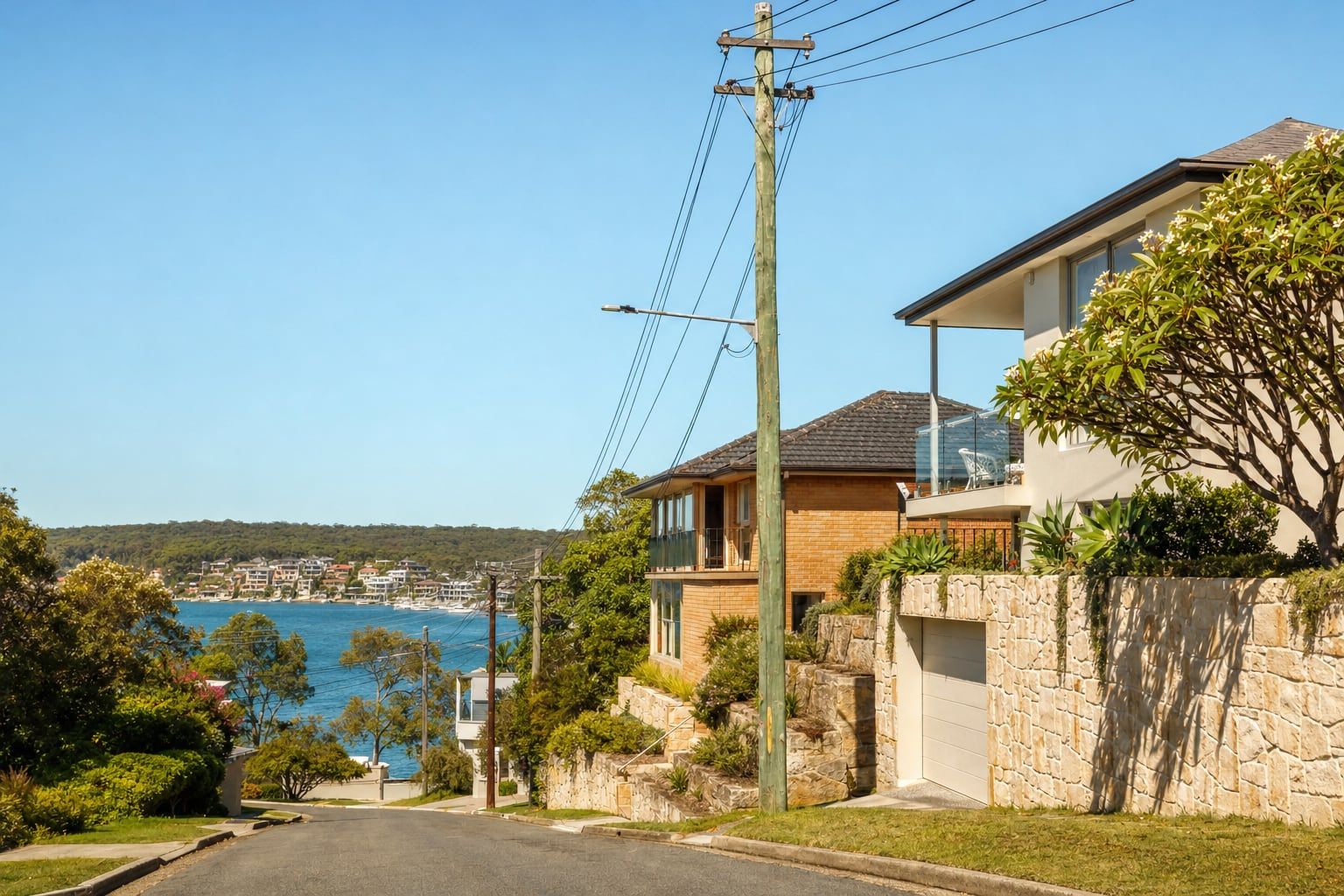
- Long spans. Steep waterfront and bush blocks have long, exposed overhead runs.
Preventing the next one
- Keep trees on your property trimmed clear of your private lines.
- Have old raisers and brackets checked, especially near the coast.
- Get your private pole inspected before storm and fire season. Our guide to private power pole inspection explains what to look for.
- Consider an overhead to underground conversion to take the line out of harm’s way for good.
A storm-season checklist for Shire homes
Before the storm season starts, take ten minutes to walk around the house:
- Look up at the line. Does it pass through or near tree branches? Is it lower than it used to be?
- Look at the raiser or bracket. Rust at the base, a bend, or cracked render or brick around the fixings are all worth a check.
- Check the meter box. Is the door sealing properly? Any sign of water, corrosion or scorch marks?
- Walk to any private pole. Look for lean, soft timber at the base and termite mud.
- Know your numbers. Save Ausgrid’s faults line, 13 13 88, and our 24/7 number in your phone.
- Know where your main switch is, and make sure everyone in the house does too.
If anything on that list worries you, it’s far cheaper and safer to fix it on a calm day than at midnight in a southerly.
Need help now?
Call the level 2 electrician Sutherland Shire team any time, day or night.
Updated
Power line down after a storm: common questions
Something else on your mind? Call 02 9158 9999 and ask.
How far should we stay from a fallen line?
At least eight metres, and keep children and pets back. Electricity can travel through wet ground and nearby objects.
The line is down but the house still has power. Is it safe?
No. A damaged line can be live even if your lights are on, or off. Treat every fallen line as live until a qualified person says otherwise.
Will insurance cover the repair?
Storm damage to the line, raiser, mains or private pole is often covered by home insurance, but policies differ. Ask your insurer and keep the report and photos from the repair.