Private power pole inspection in the Sutherland Shire: bushfire defect notices and what to check
Why Ausgrid inspects private poles in bushfire areas, what a defect notice means, the warning signs you can check yourself, and how poles are fixed.
A lot of Sutherland Shire homes sit on the edge of bushland. Engadine, Heathcote, Loftus, Waterfall, Bundeena, Maianbar, Illawong, Bangor, Barden Ridge and parts of Jannali, Como and Gymea all back onto the Royal National Park, Heathcote National Park or the bushland along the Woronora and Georges Rivers. Many of those homes get their power through a private power pole somewhere on the property. This guide explains why those poles are inspected, what a defect notice means and what you can check yourself.
What a private pole is
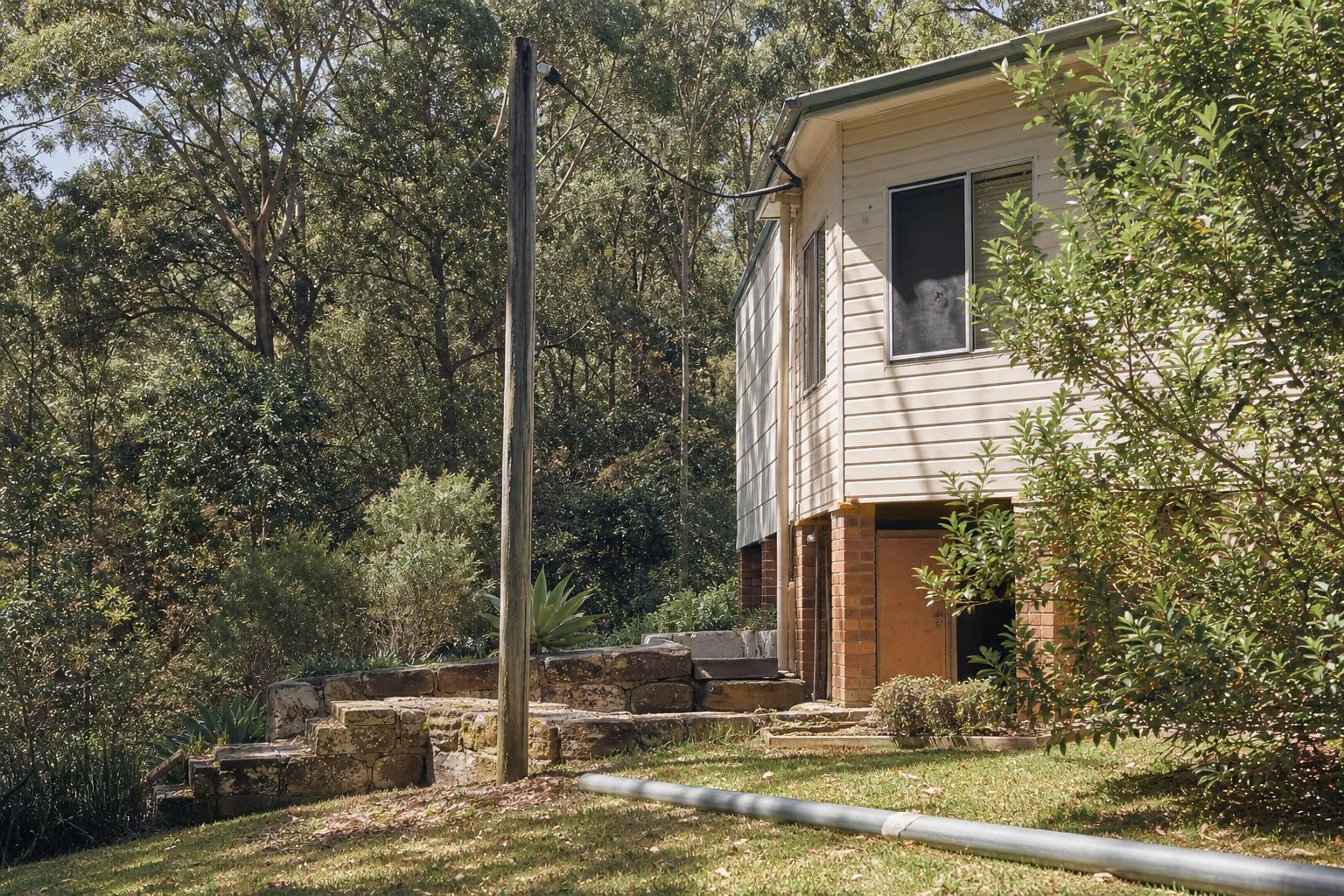
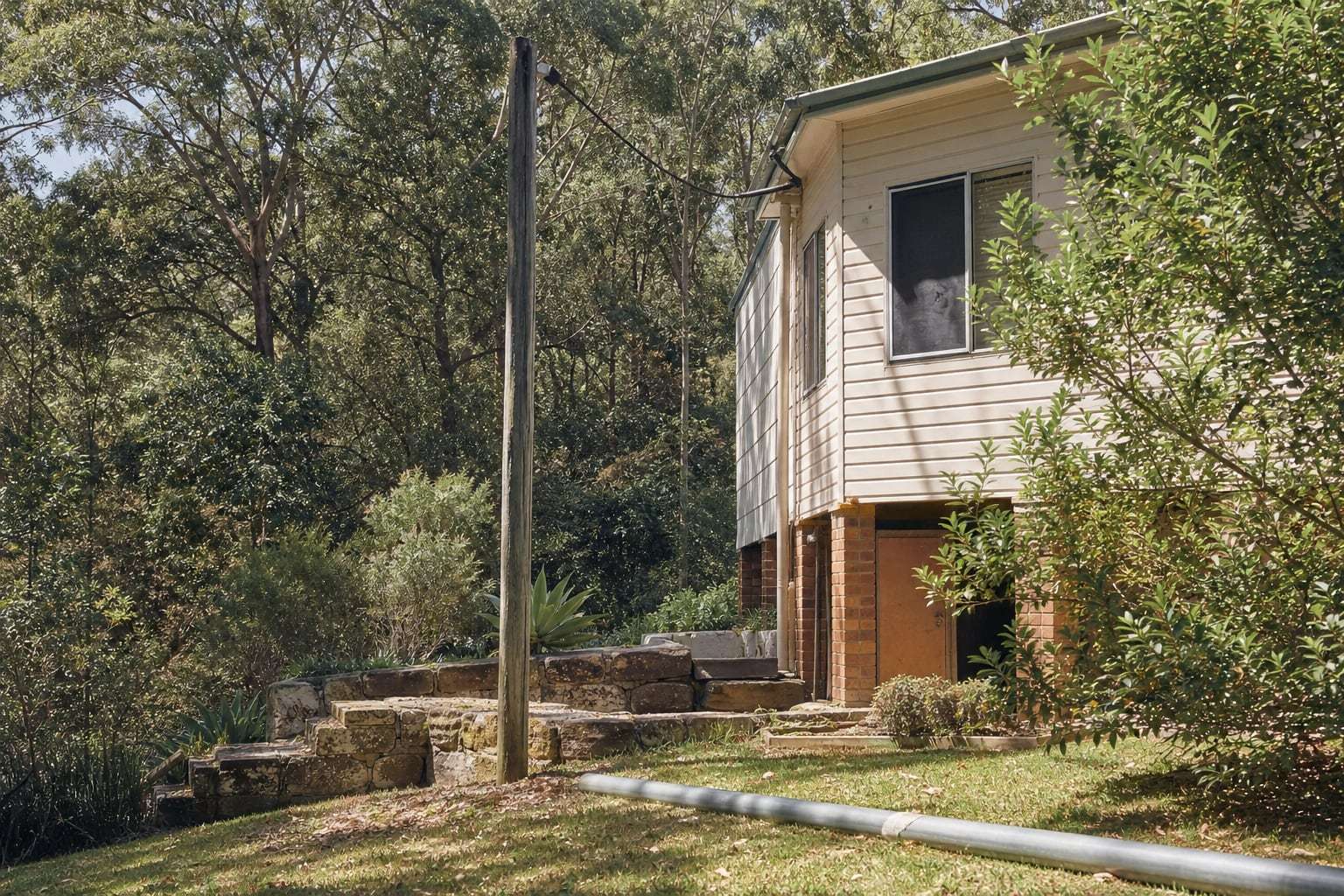
Ausgrid’s network runs along the street. A service line connects your property to it at a connection point. On most houses, that point is a bracket on the wall. On properties with a private pole, the connection point is usually at the top of that pole, and a private line runs from the pole to the house, or to several houses on a shared pole.
Everything past the connection point, the pole, the fittings on it and the private line, belongs to the property owner. So does the job of keeping trees and branches clear of it.
Why Ausgrid inspects them
Electrical faults on overhead lines can start bushfires: a decayed pole falls, a branch brings a line down, or lines clash in strong wind and throw sparks into dry vegetation. To reduce that risk, Ausgrid patrols private poles and overhead lines in bushfire-prone areas every year and contacts owners when it finds a problem.
What a defect notice covers
Ausgrid can issue a defect notice for things like:
- A decayed, damaged or leaning pole
- A damaged crossarm, insulator or other pole-top fitting
- Trees or branches growing too close to private lines
- Lines that are touching, sagging or damaged
The notice gives a time frame to fix the issue. It’s the owner’s responsibility to arrange and pay for a qualified contractor to do the work, and to let Ausgrid know it’s done. If the work isn’t done, Ausgrid will follow up and may arrange the repair and seek to recover the cost.
How poles decay
Timber poles usually fail at ground level and in the first couple of hundred millimetres below it, where there’s enough moisture and oxygen for rot and where termites get in. Poles set in concrete can be worse, because the concrete traps water against the timber. From the yard, a pole can look perfectly sound while the core has gone. Steel poles don’t rot but can rust at the base, especially near the coast.
What you can check from the ground
Without climbing or touching anything, walk around the pole and look for:
- Lean. Is it leaning, or leaning more than it used to?
- The base. Soft, crumbly or split timber at ground level, fungus, or a gap between the pole and the soil or concrete.
- Termites. Mud tubes on the pole, nearby fences, sheds or stumps.
- The top. A crossarm that looks twisted, cracked or loose, or broken insulators.
- The lines. Sagging spans, lines touching each other, or lines through tree canopy.
- Vegetation. Branches touching or hanging over the private line, or growth at the base of the pole.
- Fire damage. Charring from a past fire or burn-off.
If you see a bad lean, damaged lines or anything sparking, keep clear and call our emergency level 2 electrician line.
What a proper inspection includes
A professional inspection goes further than a look from the ground. The contractor checks the timber at and below ground level, assesses termite and decay damage, looks at the pole-top hardware, checks line clearances and vegetation, and tells you whether the pole is safe to keep, needs treatment, or should be replaced.
Ways to fix it
Treat and monitor. If decay is minor, treatment and a follow-up inspection may be enough.
Replace with timber. A new treated pole in the same place.
Replace with steel. Galvanised steel doesn’t rot, feed termites or burn, which suits bush blocks.
Clear or re-route. If vegetation is the issue, trimming, or moving the line or pole away from the trees, can fix it.
Remove the pole. An overhead to underground conversion takes the pole and private line away completely. On bush blocks, that also removes the annual bushfire concern for that equipment.
Our private power pole replacement page explains the work in more detail.
Shared poles
On some older subdivisions and battle-axe blocks, one private pole feeds two or three homes. Responsibility is then shared between the owners, and any work affects everyone’s supply. If you’re unsure how your supply is arranged, we can trace it on a visit.
Before fire season
The best time to deal with a private pole is before summer. If you’ve had a defect notice, or your pole is old and you’ve never had it checked, call the Sutherland Shire level 2 electrician team. Our guide on what to do when there’s a power line down after a storm covers the emergency side.
Updated
Private power pole inspection in the Sutherland Shire: common questions
Something else on your mind? Call 02 9158 9999 and ask.
How often should a private pole be inspected?
Ausgrid expects owners in bushfire-prone areas to have private poles and lines checked regularly, including an annual bushfire check, along with a more detailed pole inspection from time to time. If the pole is old or you've had a defect notice before, check it more often.
Can I inspect the pole myself?
You can look for warning signs from the ground, but don't climb the pole or touch the lines. A qualified contractor checks the base below ground and the pole-top fittings.
What happens if I ignore a defect notice?
Ausgrid will follow up. If the work still isn't done, it may arrange the repair and seek to recover the cost from the owner. It's simpler and usually cheaper to fix it yourself within the timeframe.